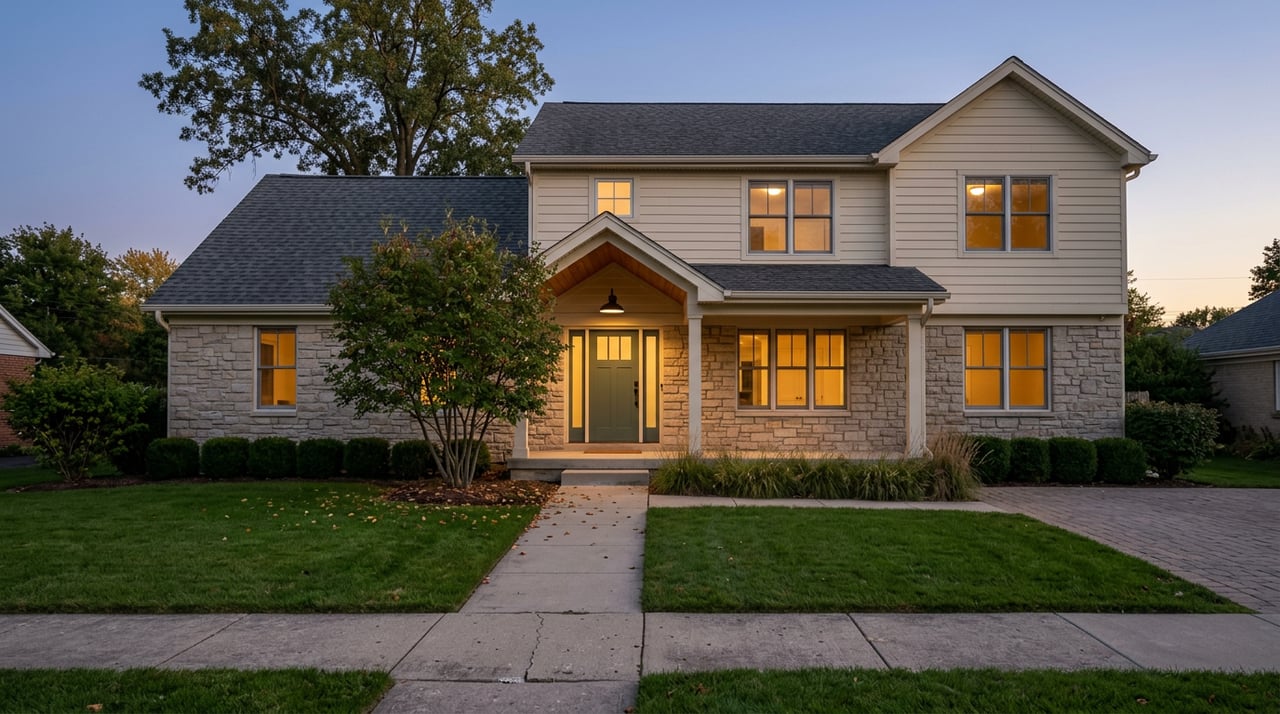
How Property Taxes Vary Across Lafayette Zip Codes
September 24, 2026
September 24, 2026
Two three-bedroom homes list for the same $250,000 in Lafayette this month. One sits in the 47905 zip code. The other sits downtown in 47901. Same price, same square footage on paper, same mortgage payment if you ran the numbers on a calculator and stopped there.
Their annual property tax bills are not close. Based on the median effective tax rates for those two zip codes, the 47905 home carries an effective rate of roughly 0.78 percent. The 47901 home carries roughly 2.00 percent. On a $250,000 assessed value, that is the difference between paying around $1,950 a year and paying around $5,000. A listing sheet or citywide median may not show the difference between these two tax bills.
That is the number worth understanding before you fall in love with a Lafayette listing based on price alone.
Lafayette's overall median effective property tax rate lands around 0.89 percent, based on a review of property records across the city's zip codes. That figure is the one most buyers see first, and it is accurate as a citywide median. It is also close to useless for comparing two specific addresses, because the spread underneath it is enormous. The same property tax data that produces the 0.89 percent citywide figure shows a 1.22 percentage point gap between the highest and lowest zip codes in Lafayette, with 47901 sitting near 2.00 percent and 47905 sitting near 0.78 percent. The lowest median tax bill in the city, in the 47904 zip, comes in around $1,615 a year. The citywide median bill is $1,942.
That difference may not show up when a home search app hands you a single "estimated taxes" line based on a countywide rate. For a specific parcel, check the actual assessment for the actual address.
The spread exists because a property tax bill in Tippecanoe County is never just one number. It is the county's base levy stacked with whichever school corporation boundary the parcel falls inside, plus any township fire protection levy, plus any special assessment or redevelopment allocation district layered on top. Two homes a few blocks apart can sit in different combinations of those layers even though both have a Lafayette mailing address.
Redevelopment financing is one of the more active layers right now. Lafayette's Redevelopment Commission approved a resolution earlier this year authorizing up to $12 million in bonds for road and infrastructure work, including a roundabout at Beck Lane, geometric improvements to Poland Hill Road, and refunding older bonds originally issued for the Twyckenham Economic Development Area. The same filing references plans for up to 267 new single-family units along a connector road extending toward State Road 231. Projects like these are typically funded through allocation-area levies tied to the district where the work happens, which is one more layer that can raise the effective rate on parcels inside that boundary while leaving a home ten minutes away untouched.
None of this means a higher rate is a bad deal. It means the rate is telling you something specific about where the parcel sits, and it is worth asking what before you assume the number on the listing sheet is the number on your tax bill.
West Lafayette's tax structure behaves differently. The one zip code reviewed there, 47906, showed a median effective rate of 1.00 percent, with no variation across the city the way Lafayette shows across its zips. That consistency is worth knowing if you're weighing the two cities against each other, because it changes what the price difference actually buys you.
Redfin's three month window ending in May 2026 put West Lafayette's median sale price at $400,000, against $245,000 in Lafayette over the same period. On the surface, that reads as a clean $155,000 gap. Once you run the tax math, it narrows. West Lafayette's median tax bill in 47906 sits around $2,971 a year on a typical assessed home value near $280,500. A Lafayette home in 47901, taxed near 2.00 percent, can produce a bill in that same range or higher on a home worth far less. The sale price gap between the two cities is real. The carrying cost gap, depending on which Lafayette zip you land in, can be smaller than the price tag suggests, or occasionally reversed.
This is also why comparing "Lafayette" to "West Lafayette" as if each were one number misses the point. Lafayette isn't one tax market. It's several, layered inside one city limit.
Tippecanoe County's pace has cooled from the frantic pandemic years, and that is worth treating as an opportunity rather than a warning sign. Tara Hines, a local agent with F.C. Tucker, told WLFI in July that average days on market for the county moved from 23 last year to 31 this year, and that sellers are adjusting to a market where offers no longer land in 24 to 48 hours the way they did in 2020.
A market that isn't demanding a same-day decision is a market where you have time to pull the actual assessment on a specific parcel before you write an offer, rather than trusting a portal's blended estimate. That extra week or two of runway is arguably more valuable to a buyer than a slightly faster closing would be, especially on a purchase where the tax line could run a few thousand dollars a year in either direction depending on which side of a school or assessment boundary the house happens to sit on.
According to Ownwell, Tippecanoe County sends assessment notices each April, and property owners who believe their assessed value is out of line with comparable homes have until June 15 to file a formal appeal with the local assessor. That deadline matters to two different people reading this. If you're buying and the assessed value on a listing looks stale or high relative to recent comparable sales, that's worth raising during due diligence, since the current owner may not have appealed even if grounds existed. If you're selling in a higher-rate zip and you're worried the tax line is going to spook buyers who are comparing your listing to something in a lower-rate part of town, checking whether your own assessment is accurate before you list gives you a factual answer instead of a guess.
Does a higher tax rate always mean a worse deal? Not by itself. A higher rate in a walkable, established part of town can still make financial sense if the location, school access, or resale demand justifies it. The point isn't to avoid higher-rate zips. It's to know the number before you're comparing it to a lower monthly payment on paper that doesn't account for it.
Why do these rates vary so much within one city? Tippecanoe County layers a base county rate with school corporation levies, township fire protection, and in some areas redevelopment or special assessment districts. Those layers don't align perfectly with city or zip code boundaries, which is how two homes with the same mailing city can end up with different bills.
How do I find the exact rate for a specific address? The Tippecanoe County Treasurer's office maintains property tax and assessment records for individual parcels, and that record will show the actual assessed value and levy breakdown rather than a citywide average.
Comparing homes across Lafayette and West Lafayette takes more than a sale price and a square footage number, and the tax layer is one of the pieces that's easy to miss until it shows up on a bill. If you're weighing a purchase or wondering how your own home's assessment compares to what's selling nearby, the team at Gibson Realty Group can walk through the specific numbers for a specific address. Get a Free Home Valuation and start with the full picture, not just the median.
This article is general information, not legal, tax or financial advice. Consult a qualified professional about your situation.
Stay up to date on the latest real estate trends.
A genuine love for the community paired with professional experience ensures a personalized and thoughtful approach to every client need.